

A used BMW B58 engine for sale typically costs between $3,800 and $7,500, depending on mileage, model year, generation (B58O1 vs. B58M0), and included accessories (long block vs. complete engine assembly). Celebrated as one of BMW’s most reliable 3.0L turbocharged inline-six engines, buying a low-mileage tested used B58 offers factory-level performance and tuning potential at nearly half the price of a brand-new crate engine.
When sourcing through a trusted supplier like US Car Parts Locator, buyers receive compression-tested engines backed by extended warranty coverage and nationwide shipping.
What Makes the BMW B58 Engine So Popular?
Introduced in 2015 as part of BMW’s modular engine family, the B58 replaced the N55. It quickly earned a reputation as a modern legendary powerplant due to its closed-deck aluminum block, forged steel crankshaft, and twin-scroll turbocharger.
- Closed-Deck Design: Provides superior structural rigidity, allowing the engine block to handle high cylinder pressures.
- Air-to-Liquid Intercooler: Integrated into the intake manifold for faster throttle response and cooler intake air temperatures.
- Heat Management: Features an engine-mounted heat storage module for reduced warm-up times and lower cold-start emissions.
- Tuning Potential: Standard stock engines reliably produce 320–382 hp, while stock internals can safely hold over 500+ horsepower with bolt-on modifications and tuning.
BMW B58 Used Engine Pricing Matrix
Engine prices vary based on vehicle donor model, production year, and total mileage recorded prior to donor dismantling.
| Generation / Variant | Compatible Vehicles | Average Mileage | Estimated Used Price |
| B58B30M0 (Gen 1) | 2016–2019 BMW 340i, 440i, 540i, 740i | 60,000 – 90,000 mi | $3,800 – $4,800 |
| B58B30O1 (Gen 2 / Technical Update) | 2019+ BMW M340i, M440i, Z4 M40i | 20,000 – 50,000 mi | $5,200 – $6,800 |
| Toyota Supra B58 Variant | 2020+ GR Supra 3.0 | 15,000 – 40,000 mi | $5,500 – $7,200 |
| B58 Mild-Hybrid (TU2) | 2023+ X5 xDrive40i, 740i | < 25,000 mi | $6,500 – $8,000+ |
Performance & Technical Specifications
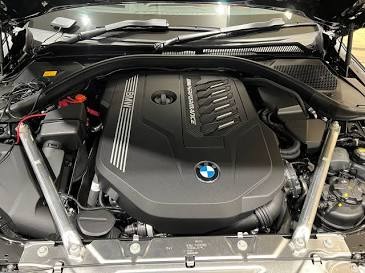
- Displacement: 2,998 cc (3.0 Liters)
- Configuration: Inline-6 (I6)
- Aspiration: Single Twin-Scroll Turbocharger
- Valvetrain: Double-VANOS variable camshaft timing & Valvetronic variable valve lift
- Fuel Delivery: Direct Injection (up to 350 bar on Technical Update models)
- Stock Horsepower: 322 hp – 382 hp
- Stock Torque: 332 lb-ft – 369 lb-ft
Key Factors to Inspect Before Buying a Used B58 Engine
Sourcing a replacement engine requires careful verification to ensure longevity and seamless installation:
- Verify VIN and Engine Code: Match the engine code (B58B30M0, B58B30O1, etc.) with your vehicle’s specific trim to avoid harness and ECU compatibility issues.
- Review Leak & Compression Tests: Ensure the supplier provides verified compression ratings across all six cylinders (typically 160–180 PSI with minimal variance).
- Inspect the Oil Filter Housing: Early Gen 1 B58 engines had oil filter housing cap issues where the paper filter could disintegrate during oil changes.
- Check Valve Cover & Oil Pan Seals: Verify no outer oil weeping exists around the composite valve cover assembly.
- Check PCV System Health: Inspect the integrated PCV diaphragm in the valve cover for signs of cracking or excessive oil residue.
Warranty Coverage and Buyer Protection
Purchasing through US Car Parts Locator protects your investment with comprehensive warranty options:
- Standard Parts Warranty: Covers internal lubricated engine components (crankshaft, pistons, camshafts, connecting rods) for 30 to 90 days.
- Extended Warranty Packages: Optional 1-year to 3-year warranty options covering parts and labor reimbursement.
- Pre-Delivery Inspection (PDI): Every engine undergoes visual inspection, rotation checks, and leak testing before shipment.
How long does a BMW B58 engine last?
With proper maintenance and regular oil changes every 5,000–7,000 miles, a BMW B58 engine easily lasts 150,000 to 200,000+ miles without requiring major internal overhauls.
Is the B58 engine reliable?
Yes, the B58 is widely regarded as one of BMW’s most reliable engines. Its closed-deck block design and improved thermal management solve many of the common failure points found in older N54 and N55 engines.
How much does it cost to replace a B58 engine?
Replacing a B58 engine costs between $6,000 and $11,000 total. This includes 3,800–7,500 for a quality used engine and 1,800–3,500 in labor costs at an independent BMW specialist.
What cars come with the B58 engine?
The B58 engine is used in numerous vehicles, including the BMW 340i/M340i, 440i/M440i, 540i, 740i, X3 M40i, X5 xDrive40i, Z4 M40i, and the Toyota GR Supra 3.0.
Can you put a B58 engine in older BMWs?
Yes, engine swaps into chassis like the E90 3 Series or E46 are possible, but require custom engine mounts, upgraded fuel systems, and standalone or adapted ECU tuning.
Frequently Asked Questions (FAQs)
How do I verify the mileage on a used B58 engine?
At US Car Parts Locator, engine mileage is verified directly via the donor vehicle’s VIN records, CARFAX history, and odometer readings prior to dismantling.
Does a used B58 engine include the turbocharger?
Complete assembly engines typically include the twin-scroll turbocharger, manifold, fuel injectors, and harness. Long blocks generally include the cylinder head and block assembly only. Always verify inclusions with your sales representative.
What is the difference between Gen 1 and Gen 2 B58 engines?
Gen 2 (B58 Technical Update / TU) introduced a redesigned fuel system with higher pressure (350 bar vs 200 bar), a single-piece timing chain drive, a lighter crankshaft, and a cylinder head with an integrated exhaust manifold on lower-output versions.
Can I upgrade my N55 engine directly to a B58?
While physically possible, swapping an N55 with a B58 requires updating the engine wiring harness, DME/ECU controllers, cooling lines, and transmission bellhousing configuration.
How quickly can a used B58 engine be shipped?
Most orders placed through US Car Parts Locator ship via freight to commercial addresses or residential liftgate locations within 3 to 7 business days across the contiguous United States.

Leave a Reply