



Setting the Stage for Smarter Stacks
Here’s a blunt truth: stacking can make or break your line. The second an automotive battery pack moves from cell prep to layer stack, tiny timing slips can ripple into big costs. On a busy shift, operators chase micro-jams, steady the feeder, and watch takt time creep—by minutes. Numbers tell the story: a small 0.2 mm misalignment across layers can cause up to 8–12% yield loss downstream, with scrap rising when quality drift goes unchecked. So, what’s actually tripping us up—and how do we fix it without trading speed for precision (or sanity)? Picture a high-mix line, varied cell formats, tighter specs, and a production manager trying to keep OEE above target with a finicky station. That’s real. Your MES flags repeat faults, vision alarms spike, and the stack height sensor disagrees with the spec sheet. Which lever do you pull first, and why?

In this guide, we take a comparative lens to stacking methods and surface what matters more than a faster robot: reliable fundamentals. We’ll map where errors start, how they compound, and which upgrades actually move KPIs. Then we’ll step into the near future—where control loops, edge checks, and clean interfaces keep the line honest. Let’s dive.
The Deeper Problem: Why Traditional Stacking Trips Over Itself
Where do conventional lines fall short?
Start with the core: the cell automatic stacking station is the quiet center of your quality curve. Yet legacy setups lean on open-loop motion, simple PLC logic, and fixed recipes that ignore variance in foils and tabs. Look, it’s simpler than you think: if the feeder skew is off by a hair, a servo axis repeats the error—perfectly. Without closed-loop vision and force feedback, the machine can’t correct in cycle, so misalignment builds layer by layer. And adhesive wet-out? If your timing drifts, you trap bubbles, then compress them—funny how that works, right? Downstream, you see it as squareness drift and early internal resistance spread.
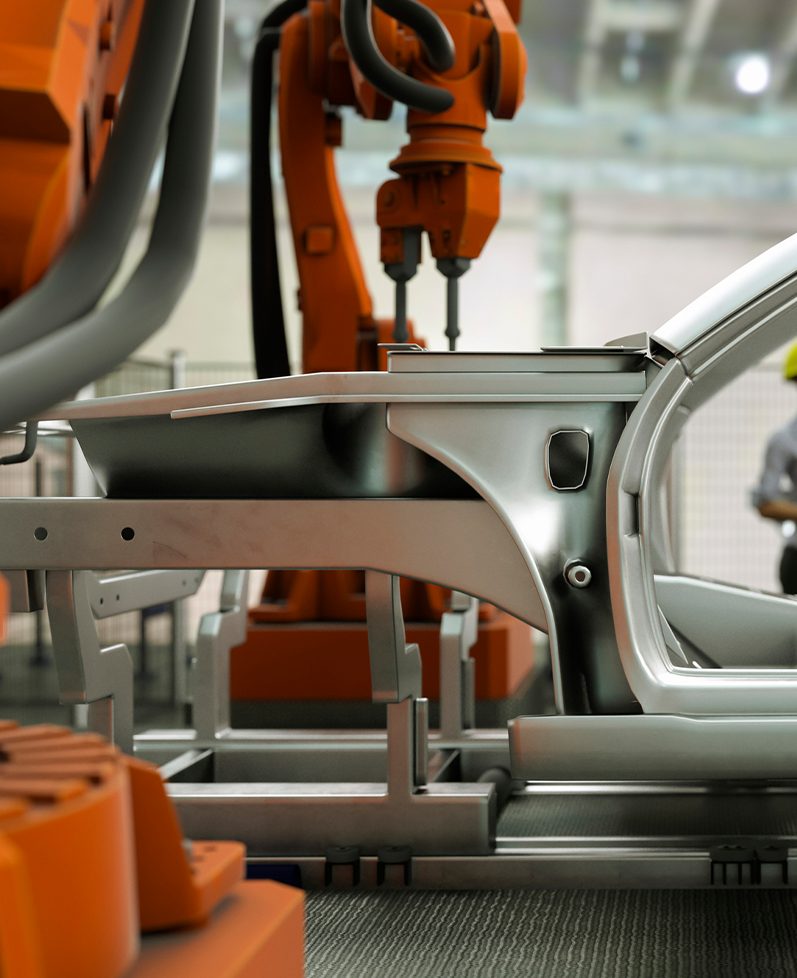
Two more hidden pain points drive cost. First, calibration debt. When pick heads, vacuum circuits, or grippers age, you need automatic self-checks at start of shift. Many lines don’t have them. Second, blind spots in traceability. If your MES only logs pass/fail but not in-cycle corrections, you can’t link a force spike or a camera nudge to later IR variance. Edge computing nodes should live near the tool so control decisions stay inside the takt window. Without that, your cycle stretches, or quality slips. Either way, uptime loses. This is why “more speed” often backfires: speed amplifies the wrong pattern if the pattern isn’t right.
From Fixes to Future: Comparing Smarter Paths to Precision
What’s Next
There are two clear tracks forward, and they’re not equal. Incremental upgrades add better cameras, tighter servo tuning, and improved vision lighting. Solid, but limited. A more durable path applies new technology principles end to end. Think model-based motion control that predicts deflection, not just reacts; inline metrology that measures stack height and squareness in-flight; and adaptive recipes that pivot by material lot. The modern cell automatic stacking station should run closed-loop with force, vision, and temperature in the loop—so corrections happen inside the cycle, not after. Tie that to interoperable data via OPC UA and you can link the station’s micro-moves to pack-level KPIs. It sounds heavy, but it’s actually cleaner: fewer alarms, fewer adjustments, fewer surprises.
Comparatively, the biggest gains arrive when intelligence sits close to the tool. Edge AI on the station filters noise, flags drift early, and pushes only meaningful events to MES. Add a lightweight digital twin for changeovers—simulate grip points, verify tab positions, test new pads—before you touch hardware. You’ll cut setup time and protect takt. Bonus: when energy spikes show up in motion profiles (yes, motors tell stories), you can tweak profiles to cut heat and extend tool life—tiny moves, big payback. The lesson so far? Precision, then speed; visibility, then scale. To choose well, use three simple evaluation metrics: 1) repeatability in microns with Cp/Cpk under real load, 2) sustained takt time at target OEE during a full shift, and 3) end-to-end traceability depth, from in-cycle corrections to downstream IR and capacity tests. Get those right and the rest follows—no heroics required. For teams seeking a grounded benchmark, look at systems delivered by partners like LEAD.

Leave a Reply